- The Wizdom Newsletter
- Posts
- Posting more won’t fix what you’re doing wrong.
Posting more won’t fix what you’re doing wrong.
This is the nuance nobody explains that I have been WAITING to talk about.

Wiz Of Ecom
December 12, 2025
A few days ago, I saw a message from a founder that I haven’t stopped thinking about.
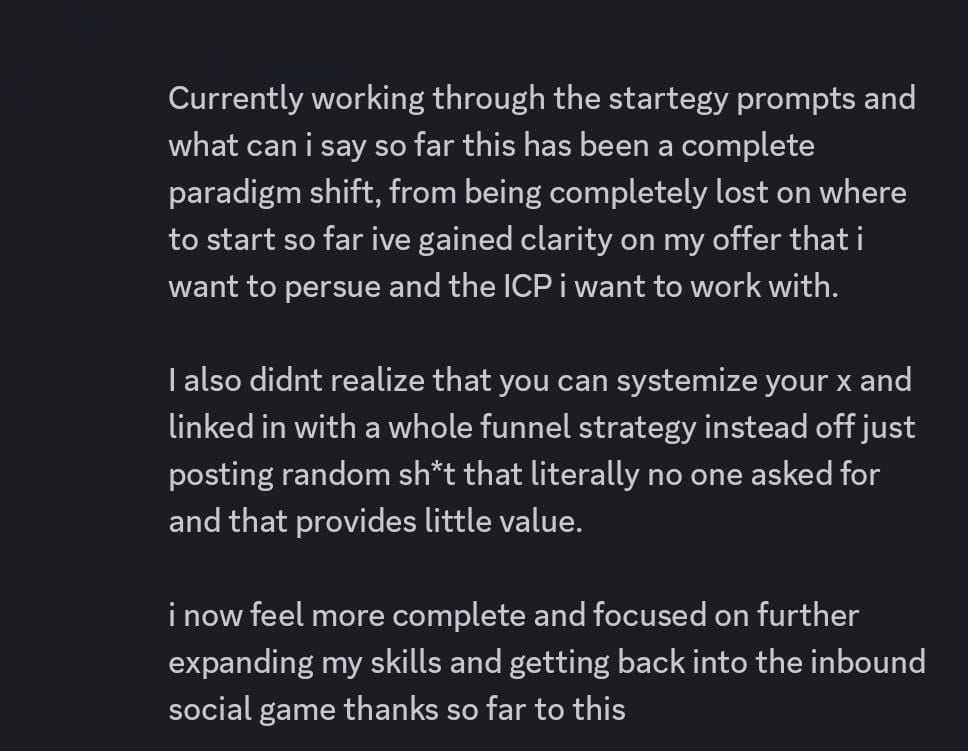
He’s the same person with the same skills, on the same internet.
The only thing that changed was the way he looked at personal branding.
I’ve worked with over 450 founders now I’ve seen the pattern where they treat personal branding like this vague, creative side quest:
“I should probably post more.”
“I need to be active on X.”
“I’ll share stuff when I have time.”
So they jump straight into tactics like:
Stealing hooks
Copying those meaningless threads that borrow authority from other celebs/authorities
Posting whatever comes to mind between calls
And then they quietly stop the whole thing because it doesn’t move the needle. But then something comes up on their timeline again that inspires them to restart their personal brand…
And just like that, they’re stuck in a hamster wheel.
But this only happens because personal branding gets reduced to “content.”
And when that happens, it becomes another chore.
Even though a personal brand has so much upside
1. Forces you to decide who you serve
The reason the founder from earlier in this email had a paradigm shift wasn’t because he discovered some magical copy formula.
It’s because he was forced to answer questions most people avoid:
Who do you want to be a hero to?
What problem do you solve so well that you’d stake your name on it?
What outcomes do you want people to associate with you (instinctively, without thinking)?
A real personal brand makes vague things concrete:
“I help brands grow” → becomes “I help retention-focused DTC brands turn emails into a predictable 7-figure channel.”
See the difference in clarity between the two.
Once this level of clarity exists, every post, DM, and podcast invite has a direction.
You’re curating a specific kind of person around a specific kind of problem.
2. Your profile is not a diary. It’s a storefront.
A lot of you are doing incredible work behind the scenes:
Closing meaningful deals
Building systems your competitors don’t have
Getting client results that would grab attention instantly…if anyone saw them
But when I land on your profile, it feels like walking past a store with the lights off.
No clear promise, no obvious path to walk in, no sense of what I’m supposed to do with the attention I just gave you.
Personal branding is the process of turning that dark storefront into a living space:
Your bio is the sign above the door
Your pinned post is the window display
Your weekly content cadence is the layout inside where people naturally walk, are directed towards what to notice, and be moved closer to buying
When you get this right, X and LinkedIn stop being “platforms” and become an always-on inbound sales floor.
3. The nuance: you are building authority, so stop obsessing over virality
The founder in that message didn’t say:
“I finally cracked how to go viral.”
He said:
“I didn’t realize you could systemize X and LinkedIn as part of a funnel strategy instead of posting random sh*t nobody asked for.”
That sentence is the most important principle to internalize.
Virality is about reach. (And there’s nothing wrong with it, as long as it’s done tastefully)
BUT Authority is about relevance and repeatability.
If you’re a serious operator in the 8/9-figure ranges, you’ll take:
3,000 views from 300 ideal buyers over
300,000 views from people who will never work with you
But you only earn that kind of relevance when your content is built on:
A clear offer
A defined ICP
A deliberate narrative of where you’ve been, what you’ve learned, and what you can do for them
That’s why, inside my own world aka Mogul Media, we treat content like an engineering problem:
What do we want this founder to be known for?
What journey are we taking their audience on over the next 90 days?
How do X, LinkedIn, email, and longform all support that journey?
The posts are just a part of how we execute all this.
4. Where to start if you feel completely lost
If you read this and thought:
“This all sounds great, but I have no idea where to begin.”
Here’s where I’d start this week:
1. Write a one-sentence positioning statement.
“I help [specific person] get [specific outcome] by [specific mechanism].”
2. Audit your profiles.
Ask: “If a stranger lands here, can they understand that sentence in 5 seconds?”
3. Create one “anchor” piece per week for the next 4 weeks.
○ Week 1: Your story (how you got to where you are)
○ Week 2: One client or personal case study
○ Week 3: A step-by-step breakdown of how you solve a core problem
○ Week 4: A strong opinion about your industry that you’re willing to stand behind
4. Treat everything else as support including replies, short posts, carousels. All of it should point back to those 4 anchors.
If you do just that consistently for a month, you’ll feel the same shift that founder is talking about.
Your personal brand is not just some side quest and all the best personal brands you see online have been carefully manufactured with so much intentionality.
Build yours like it matters.
– Wiz
P.S if you need extra support, I have a few resources to help you out:
- If you’re looking to do it all yourself, start with Utopia.
- If you’re looking to do it yourself but want help with the strategy for the first 30 days to help you kickstart, get the strategy bundle.
- If you’re a founder doing over $50k/mo and want a personal brand built for you that makes you the most respected name in your industry then apply to work with us at Mogul Media.